
The abovementioned three panel members will address the FISA Conference, sponsored by Hollard Court Bonds, on 9 September 2026 on the topic: “Is it still worth providing trust services, given the severe compliance, legal, and operational liabilities of trustees and trust service providers?”
To register for the 16th Annual FISA Conference – click here
Providing trust services involves a critical trade-off between fiduciary fees and severe compliance, legal, and operational liabilities.
Key discussion points:
- fiduciary liability
- strict regulatory compliance
- reputational risks of mismanagement
- core revenue and growth benefits
The Risks
- Strict Fiduciary Liability:
Beneficiaries, co-trustees, or third-party creditors can sue trustees personally. If the court finds a trustee did not act with the expected “care, diligence, and skill,” they may be held personally liable for trust losses. Historically, there was a tendency for people to act as trustees in their personal capacities. Does this pose a greater risk than moving trusteeships into a legal entity, such as a company? Is there legal precedent for keeping trustees personally liable? What can independent trustees do to prevent being sidelined as the minority amongst the husband and wife trustees? What did the Shepstone and Wylie case teach us about trustee decision-making? - Regulatory Compliance & Penalties:
Trust service providers operate in highly regulated environments. Failing to file beneficial ownership registers or tax documentation can result in heavy financial penalties.- Trust service providers are now regarded as “Accountable Institutions”, requiring them to meet their obligations under the Financial Intelligence Centre Act. What is expected of accountable institutions? What are the fines that trust service providers can incur? Are any types of trusts or activities that trust service providers perform excluded from the reach of the FIC Act?
- As trustee, the trust service provider can also be held liable for the fines under the Trust Property Control Act. What are practical mitigating processes one can implement to reduce your risk. How easy or difficult is it to obtain professional indemnity cover?
- SARS recently introduced penalties for late submission of trust tax returns. How do these penalties work? What should practitioners do if a trust is non-compliant?
- Do trustees have any obligations under POPIA and PAIA?
- Reputational Damage:
A single breach of confidentiality, improper asset management, or legal misstep can cause irreversible damage to the provider’s credibility. Are professionals and professional bodies sitting on a time bomb for typical historical lack of necessary attention to the role as trustee? - Anti-Money Laundering Vulnerabilities:
Trustees and corporate service providers are prime targets for illicit financial schemes, requiring exhaustive due diligence to prevent financing of terrorism and money laundering. Are trust service providers equipped to perform this due diligence? Do they price for the additional cost? Do practitioners typically ask an onboarding fee as some international service providers do? - Operational & Technology Costs:
Implementing the legal obligations requires significant investment in compliance personnel, data security, and software. Are service providers adopting technology to assist them with their compliance? - Challenges at the Master’s Office:
Trust service providers and trustees are severely affected by the Master’s slow turnaround times. Is there light at the end of the tunnel? What can be done to avoid disasters, such as leaving the trust incapacitated due to trustees dropping below the sub-minimum number of trustees?
The Rewards
- Fiduciary Fees & Revenue Streams:
Ongoing administration and asset management fees provide a steady, predictable source of recurring revenue. Have South Africans adapted to the culture of paying for trust services, something they have traditionally not paid for? How do service providers price for the risk? - Client Retention & Holistic Wealth Management:
Offering trust services enables institutions to deepen relationships with high-net-worth clients and cross-sell services such as estate planning. Consumers now prefer a “one-stop shop” and are no longer willing to go to multiple advisors. Does trusteeship provide this “anchor” relationship? - Brand Authority & Prestige:
Successfully safeguarding multi-generational wealth builds immense prestige and cements long-term institutional loyalty. What is practitioners’ experience – does the new generation stay with their parents’ trusted advisors, or are they mobile?
The solution?
Has the time come in South Africa to introduce the concept of a professional trustee? What would that look like?
To learn more about the panel members, please click below:
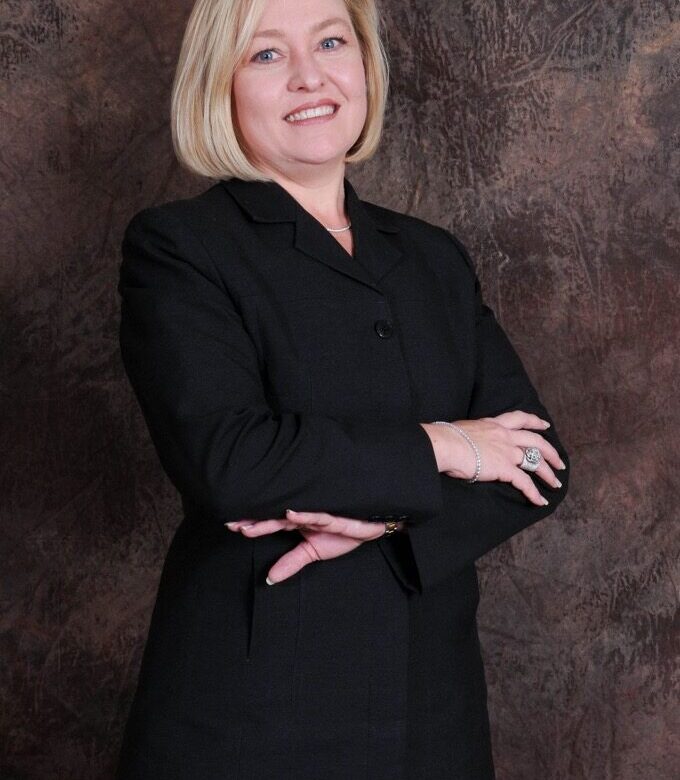
Phia van der Spuy – Phia van der Spuy is a Chartered Accountant with a Masters degree in Local and International Tax, a Certificate in Financial Markets, and a Certificate in Corporate Governance. She is a registered Fiduciary Practitioner of South Africa®, a Chartered Tax Adviser, and a Trust and Estate Practitioner (TEP). She also holds a B.Com honours degree in Industrial Psychology.
Phia’s career spans more than 35 years, with a strong financial and legal background. She has held various positions at some of the largest financial and other institutions in South Africa. These roles included finance, compliance, structured finance, property finance, property development and business development. She advised clients on structuring and consolidating financial risks and conducted forensic audits. She also has considerable experience in developing start-ups and helping them grow.
Phia founded a trust administration business in 2015 called Trusteeze®. She automated a real-time, integrated online banking, administration, and accounting system for trusts. The group evolved into a digital solutions provider in the fiduciary sector. Estateeze®, the latest addition to the group, is a revolutionary estate administration system. It is a true game-changer thanks to its groundbreaking, first-of-its-kind architecture. By fully digitising reporting, tracking, and compliance checks, it reduces lengthy administrative delays, combats fraud through secure digital verification, and provides a seamless, transparent experience for executors and families alike. By completely reimagining traditional workflows, it seamlessly integrates advanced capabilities into a highly intuitive framework. This ensures unprecedented efficiency, effortless
adaptation to dynamic demands, and a new industry standard.
Phia regularly writes about trusts and estate planning in various national newspapers to educate and enlighten estate owners. She also published the second edition of her book, “Demystifying Trusts in South Africa”, to educate all role-players in a trust.
She speaks at various conferences, on radio and television programmes, for professional bodies, and offers training workshops and industry update webinars. She is a guest lecturer for universities on trusts and estate planning and previously served as the examiner for the Trust Administration module in the Advanced Diploma in Estate and Trust Administration at the University of the Free State, South Africa.
Phia has received the Fiduciary Institute of South Africa’s (FISA) Chairperson’s Award for 2020 in recognition of her contribution to the fiduciary industry.

Prof Bradley Smith – Prof Bradley Smith holds the degrees B Com (cum laude), LLB (cum laude), LLM (cum laude) and LLD from the University of the Free State (UFS). He was the recipient of the Dean’s Medal for the best LLB student in 2003 and for the best LLM student in 2007.
After twenty years in the public higher education sector, where he attained the rank of full professor, he joined Emeris as a Senior Researcher in 2023 and was simultaneously appointed as an Extraordinary Professor of Private Law at the UFS.
He has specialised in and published extensively on family law and the law of trusts, with more than thirty peer-reviewed national and international publications in these fields. He has also co-authored textbooks and contributed to scholarly works, including The law of divorce and dissolution of life partnerships in South Africa (J Heaton ed, Juta, 2014) and Fundamentals of South African trust law (LexisNexis, 2019 and 2023, with F du Toit and A van der Linde).
Since 2013, he has been rated as an established researcher by the National Research Foundation. His research has contributed to legal development through citation in leading judgments of the South African courts, including the Constitutional Court and the Supreme Court of Appeal. Notable examples include PAF v SCF 2022 (6) SA 162 (SCA); Bwanya v The Master of the High Court and Others 2022 (3) SA 250 (CC); Laubscher NO v Duplan 2017 (2) SA 264 (CC) and Paixão v Road Accident Fund 2012 (6) SA 377 (SCA.
LinkedIn profile:
https://www.linkedin.com/in/prof-bradley-smith-45735429/?skipRedirect=true

Johnny Davis is the Head of PH Fiduciary and a fiduciary specialist with extensive experience in estate planning, trust structuring, wealth preservation, and fiduciary administration. PH Fiduciary is a specialized division of the South African law firm, PH Attorneys, focusing on estate planning, trust administration, and tax compliance. They provide comprehensive wealth preservation services, independent trusteeships, offshore investment structuring, and deceased estate administration for local and international clients.
Johnny advises high-net-worth individuals, families, entrepreneurs, and wealth management professionals on the establishment and management of local and offshore trusts, succession planning, deceased estate administration, and tax-efficient wealth transfer strategies. Drawing on his legal and financial planning background, Johnny develops bespoke fiduciary structures that protect, preserve, and transition wealth across generations while ensuring compliance with an evolving regulatory landscape. His practical and client-focused approach has positioned him as a trusted advisor in the private client and fiduciary space, leading multidisciplinary teams that deliver comprehensive estate planning and wealth structuring solution.
Qualifications
- B.Com (Law)
- LL.B (cum laude)
- Postgraduate Diploma in Financial Planning
- Attorney of the High Court of South Africa